Product Design
Project Overview
Company: Paystack
Industry: Fintech
Product: Passport
My Role: Product Designer
Context
Selling across borders is harder than it sounds.
Today, If a business in Nigeria wants to sell to customers in the US or UK, It requires setting up legal entities, navigating local compliance, and supporting unfamiliar payment methods (complexity that quickly becomes a barrier to growth).
At Paystack, we set out to remove that barrier with Passport — a product that enables businesses to sell globally without a local presence. By acting as the Merchant of Record, Paystack handles compliance, local payment methods, and chargebacks, allowing businesses to focus on selling.
My Role
I designed the experience for existing Paystack merchants to onboard and activate Passport directly from their dashboard and expand into new markets without restarting onboarding.
Balancing clarity and speed
The onboarding needed to:
clearly explain what merchants are signing up for
handle legal and compliance requirements
support multi-country configuration
while still feeling fast and easy to complete.
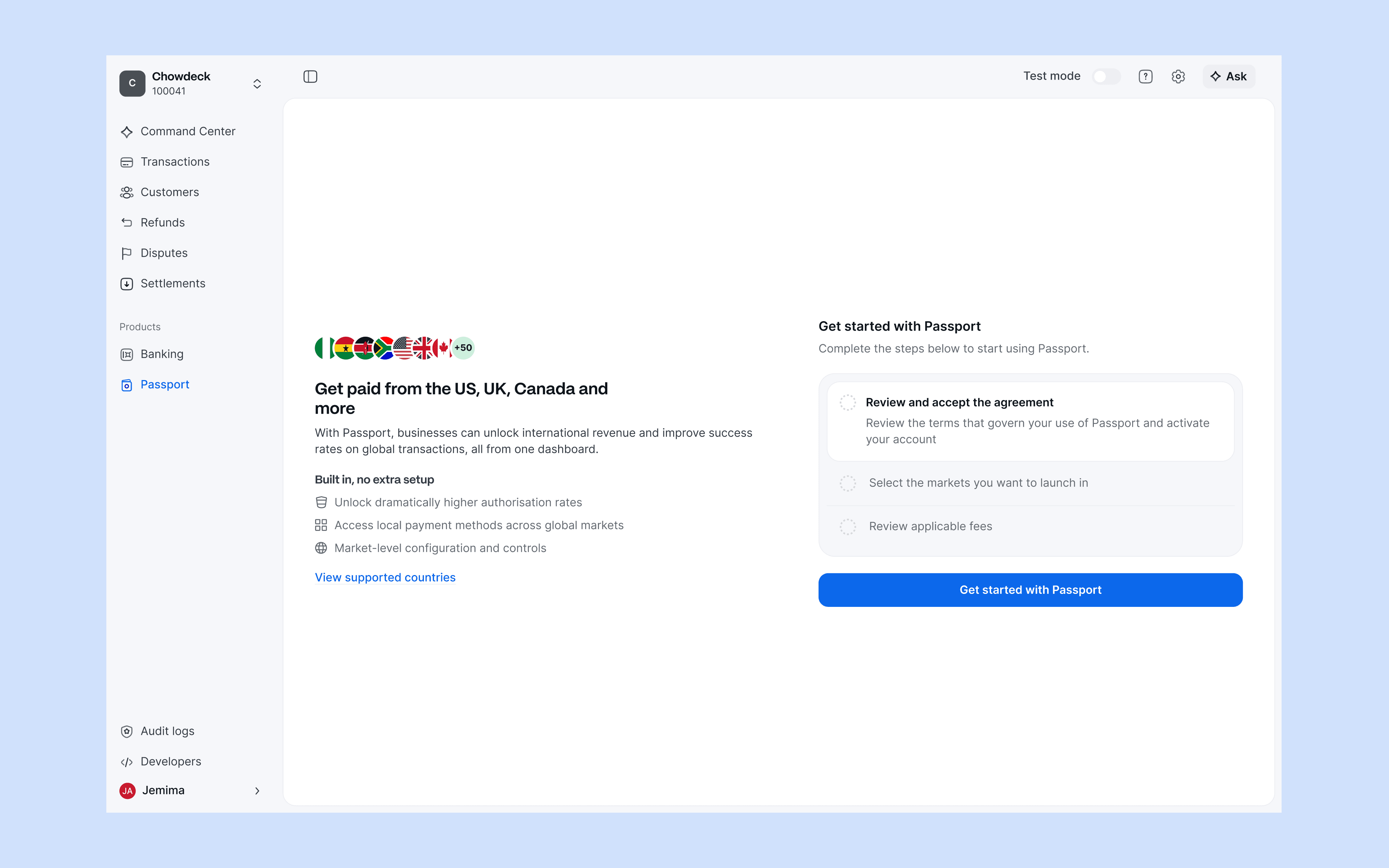
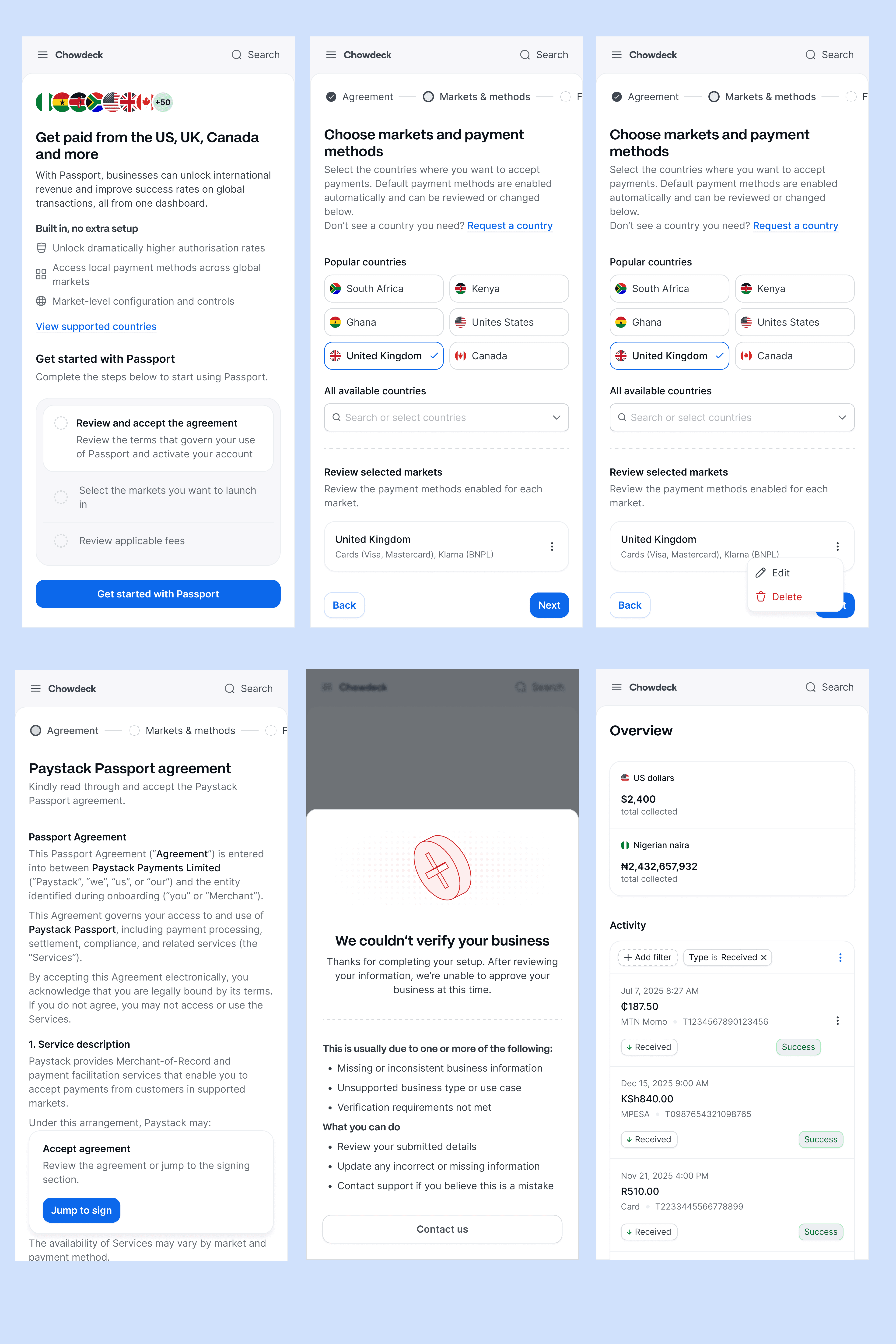
The landing page was designed to clearly communicate Passport’s value while setting expectations for the onboarding process through visible setup steps.
Onboarding
The onboarding experience was structured into three key steps:
Agreement
Market selection
Fees review
This structure provides clarity while minimizing friction.
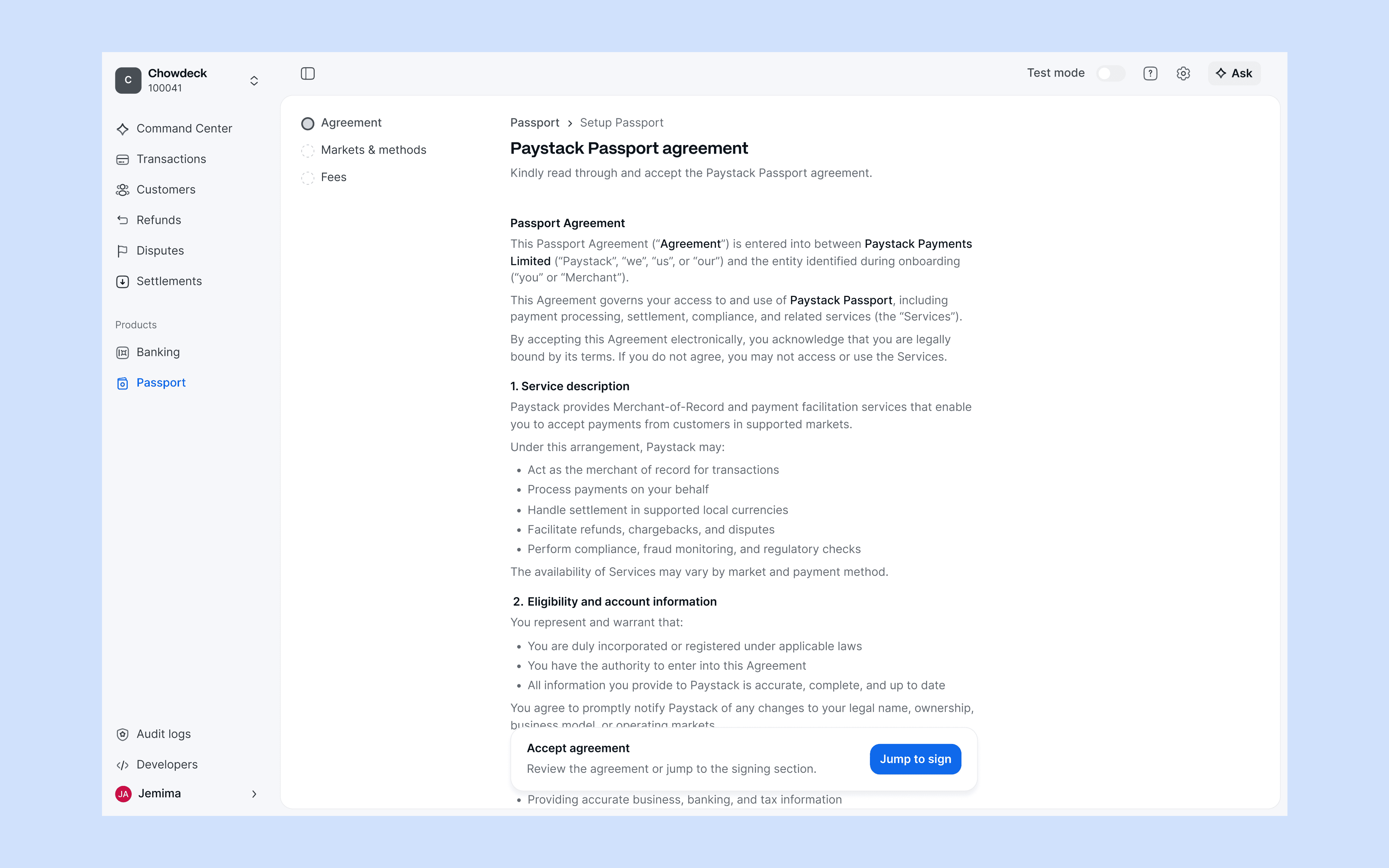
The agreement is long and unavoidable.
To reduce friction, a “Jump to sign” option was introduced, allowing merchants to quickly navigate to the signature section after reviewing the terms.
Selecting markets and payment methods
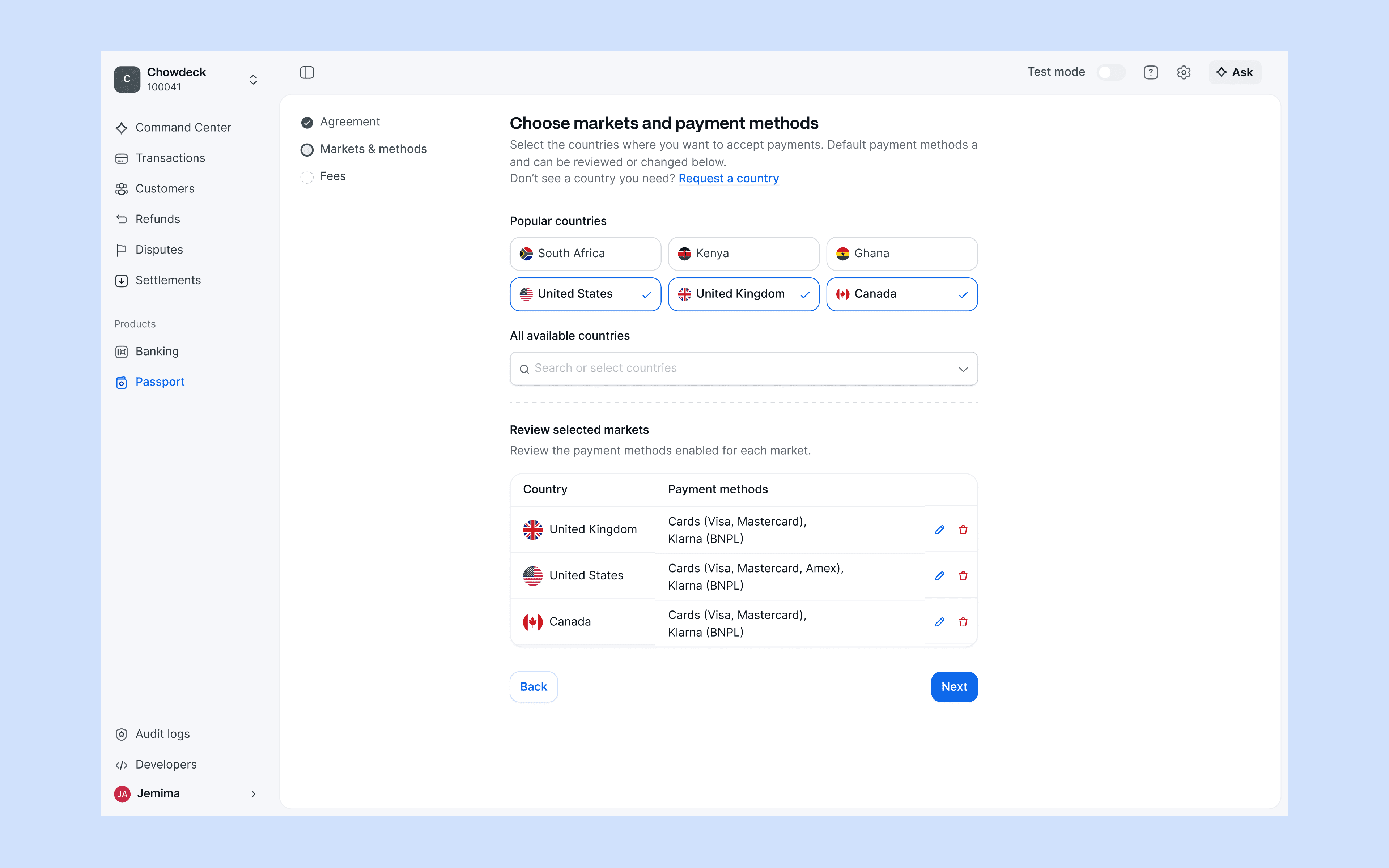
Designed for completeness by default.
When merchants select a country, all available payment methods are enabled by default.
This ensures they don’t miss critical options during setup, while still allowing them to review and customize based on their needs.
Overview
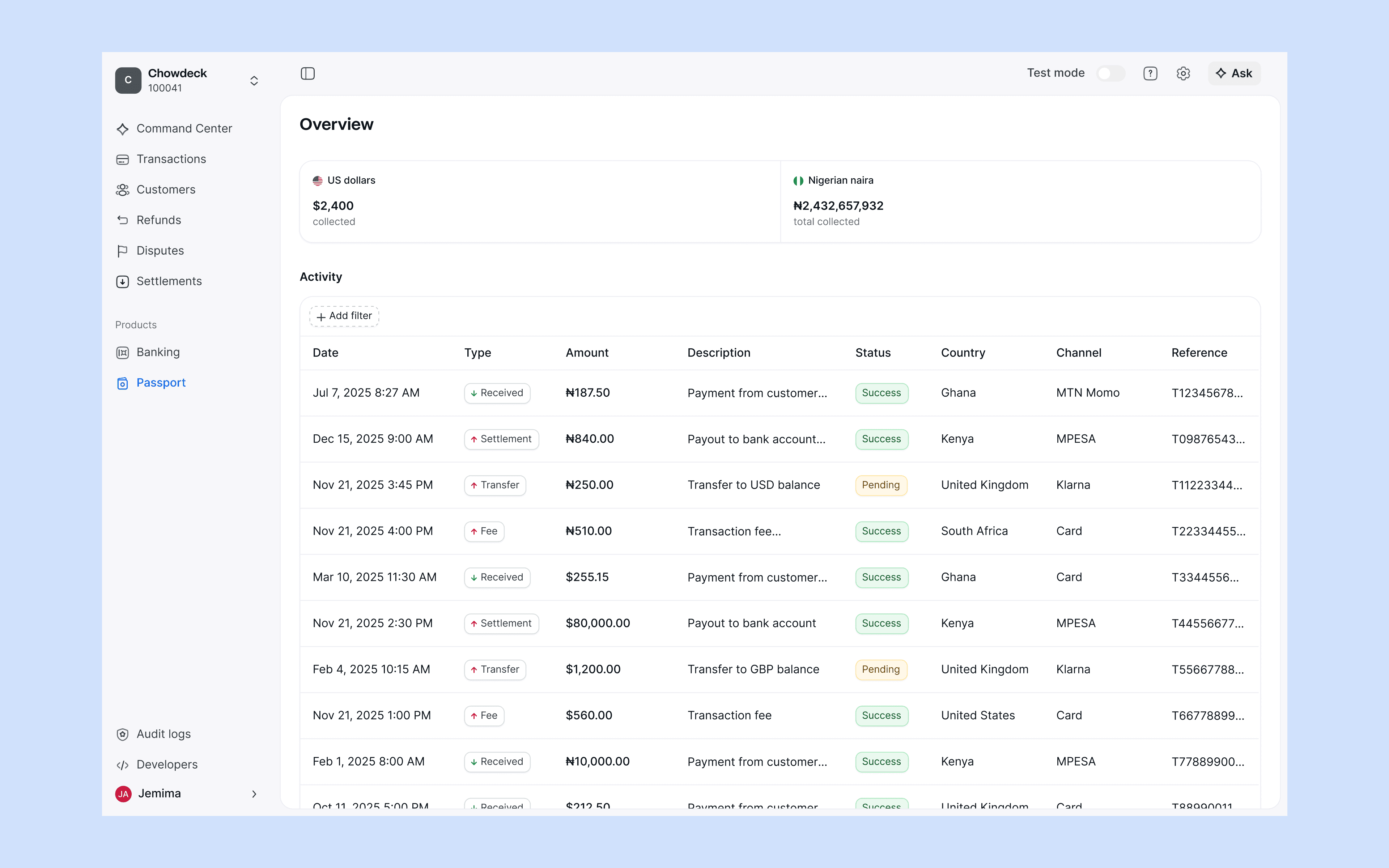
To simplify financial visibility, the overview surfaces key metrics; balances, total funds collected, and recent activity — allowing merchants to quickly understand their Passport performance.
Responsive by design, not as an afterthought
All flows were thoughtfully adapted for mobile, prioritizing clarity, hierarchy, and ease of navigation on smaller screens.
My learnings
I learned a lot while working on this project, from learning so much about regulatory and compliance requirements, to collaborating with multiple teams and dealing with feedback and change of scope while maintaining excellence. This was an interesting project to work on and i'm glad i got to contribute to infrastructure that expands opportunities. Here are some other lessons i learned:
Clarity and trust go hand in hand
In high-stakes flows involving legal and financial decisions, clear context and transparency are just as important as usability.Thoughtful defaults and small interactions reduce friction
Enabling key options by default and introducing features like “Jump to sign” help minimize decision fatigue and make long, necessary steps feel more manageable.Reducing friction isn’t about removing complexity
Some constraints are unavoidable — the role of design is to structure them in a way that feels clear and manageable.Fall in love with the problem, but don’t get too attached to the solution.
Team
Design Lead: Dara Assim-Ita
Product Designer: Hannah Olaniyi